

Embarking on your IVF consultation marks a significant step toward achieving your dream of parenthood. This first meeting is more than just a formality—it sets the foundation for your entire fertility journey. Knowing what to expect, how to prepare, and which questions to ask at your IVF consultation can make the process more comfortable and productive. By approaching it with knowledge and preparation, you can make confident, informed decisions that align with your medical needs and emotional readiness.
Table of Contents
Understanding Your Personal Fertility Situation
Before beginning treatment, your fertility specialist will review your health background, test results, and any previous attempts at conception. This stage helps clarify the root causes of infertility and the best treatment path forward. Properly understanding your diagnosis is key to tailoring your IVF journey effectively.
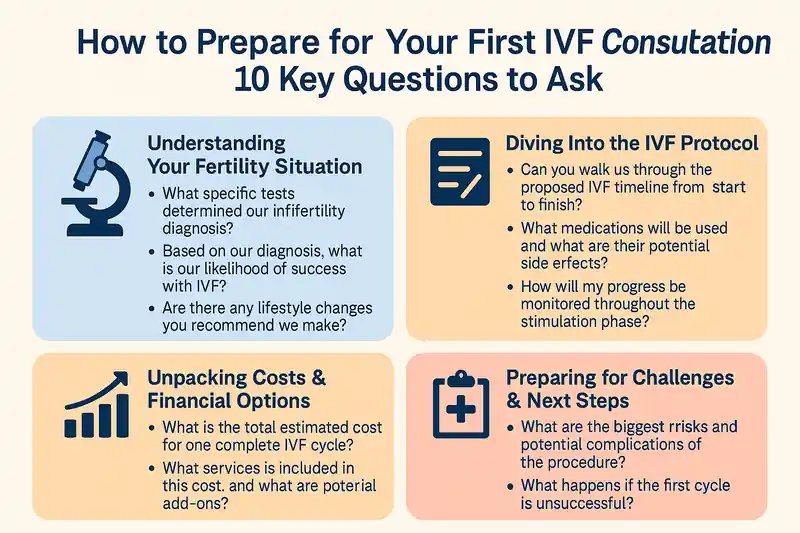
What specific tests determined our infertility diagnosis?
At your first IVF consultation, one of the most important discussions revolves around the diagnostic tests performed before treatment. These might include hormone level assessments, semen analysis, ultrasound scans, or hysterosalpingography (HSG). Understanding which tests led to your diagnosis helps you identify the underlying fertility challenges—whether they stem from ovarian function, sperm quality, or other reproductive factors. Ask your doctor to explain each test result in simple terms and how they collectively define your infertility type.
Based on our diagnosis, what is our likelihood of success with IVF?
Every fertility case is unique, and your chance of success with IVF depends on variables such as age, egg quality, sperm parameters, and previous reproductive history. During your consultation, request personalized statistics based on your profile rather than general clinic averages. A transparent discussion about your IVF success rate helps set realistic expectations and reduces emotional stress.
Are there any lifestyle changes you recommend we make?
Your lifestyle can directly influence the success of your IVF cycle. Ask your doctor whether changes to your diet, exercise routine, caffeine intake, or sleep patterns could improve your results. Quitting smoking, managing stress, and achieving a healthy BMI are often part of the IVF consultation checklist, as these factors significantly affect egg and sperm health.
Should we consider any alternative treatments before IVF?
In some cases, your specialist may suggest alternative fertility treatments before proceeding with IVF—such as intrauterine insemination (IUI), ovulation induction, or lifestyle modification plans. Discuss whether these options are viable based on your diagnosis and time considerations. A good fertility clinic consultation always includes exploring all available paths before recommending IVF.
Diving into the Proposed IVF Protocol
Once your fertility background is clear, your doctor will outline the IVF process specific to your case. Understanding the steps, medications, and timeline helps you feel more in control and reduces anxiety about the unknown.
Can you walk us through the proposed IVF timeline from start to finish?
It’s essential to ask your doctor to explain the IVF timeline for the first cycle—from ovarian stimulation to embryo transfer. Typically, a full cycle takes about four to six weeks, but timing may vary depending on your response to medication. Knowing what to expect helps you plan work schedules, travel, and emotional support.
What medications will be used and what are their potential side effects?
Your doctor will prescribe medications to stimulate your ovaries, prevent premature ovulation, and prepare your uterine lining for implantation. During your IVF consultation, take note of the drug names, dosages, and possible side effects like bloating, fatigue, or mood changes. Understanding these in advance helps you manage expectations and recognize when to seek medical advice.
How will my progress be monitored throughout the stimulation phase?
Monitoring is a critical part of ensuring safe and successful IVF. Ask how frequently you’ll undergo blood tests and ultrasounds to track follicle development. Knowing the monitoring schedule gives you a clearer picture of your commitment and helps you stay proactive throughout your first IVF consultation discussions.
What happens on the day of the egg retrieval and embryo transfer?
Finally, request a detailed explanation of what to expect during these two major procedures. Learn about anesthesia options, recovery time, and post-transfer instructions. This part of the preparing for IVF consultation process ensures that you are emotionally and physically ready for every stage ahead.
Evaluating the Clinic’s Success Rates and Laboratory
One of the most important parts of your IVF consultation is assessing the fertility clinic’s performance and laboratory standards. Not all clinics operate with the same level of technology, experience, or success rates. Understanding these details will help you choose a facility that aligns with your expectations and maximizes your chances of success.
Before making a commitment, take time to review the clinic’s statistics, accreditations, and laboratory protocols. These factors can significantly impact embryo quality, implantation success, and overall treatment satisfaction.
What is the clinic’s live birth rate per embryo transfer for our age group and diagnosis?
Success rates are among the most frequently asked questions during a fertility clinic consultation. Ask your doctor for data that specifically relates to your age group, diagnosis, and treatment plan. The most reliable statistic is the live birth rate per embryo transfer, which shows the clinic’s real-world performance. However, be cautious of overly high claims—success rates can vary based on patient demographics and treatment complexity. A transparent clinic will present honest, verifiable numbers.
Can you tell us about the embryology lab’s qualifications and technology?
Behind every successful IVF cycle is a skilled embryology team. During your first IVF consultation, ask detailed questions about the lab’s technology and staff qualifications. Inquire about equipment like time-lapse incubators, micromanipulation systems, and cryopreservation methods. These tools help maintain ideal conditions for embryo development. Accreditation by international bodies such as ISO or CAP adds another layer of reliability.
How do you decide how many embryos to transfer?
The number of embryos transferred has a major influence on both success and safety. Ask your specialist about their decision-making process. Clinics typically balance the desire for a high success rate with the risk of multiple pregnancies. Your age, embryo quality, and medical history determine whether one or more embryos will be transferred. Understanding this during the IVF consultation ensures you are involved in every major decision.
What are your protocols for embryo grading and selection?
Embryo grading is another key factor in determining the outcome of your IVF treatment. High-quality embryos are more likely to implant successfully and lead to healthy pregnancies. During your consultation, ask how the clinic evaluates embryos—whether through morphology, genetic testing, or advanced imaging tools. Learning about their embryo selection process gives insight into the clinic’s precision and care standards.
Unpacking the Costs and Financial Options
The financial aspect of IVF can be just as important as the medical one. A clear and transparent discussion about IVF consultation cost helps you prepare mentally and financially for the journey ahead. Understanding what is included—and what is not—prevents surprises and allows you to plan strategically.
Before signing any agreement, review every cost breakdown, including consultations, medication, procedures, and optional add-ons. Financial clarity reduces stress and ensures that your focus remains on treatment, not logistics.
What is the total estimated cost for one complete IVF cycle?
At your first appointment, ask for a detailed quote covering all stages—from the initial fertility clinic consultation to embryo transfer. A complete cycle usually includes ovarian stimulation, egg retrieval, fertilization, and transfer. Prices can vary widely based on location, clinic reputation, and whether genetic testing or donor options are involved. Having an accurate cost estimate allows you to evaluate affordability and plan accordingly.
What services are included in this cost, and what are the potential add-ons?
Some clinics advertise “package deals” that seem affordable at first but may exclude crucial services like medications, anesthesia, or embryo freezing. Always confirm exactly what is covered. Ask your provider for a cost breakdown sheet to identify which items are optional versus required. Transparency is key to building trust and avoiding hidden charges later.
Do you offer any financing plans or package deals?
Many fertility centers understand the financial strain IVF can create and offer flexible payment plans or multi-cycle discounts. During your IVF consultation, inquire whether the clinic partners with medical financing institutions or provides in-house plans. Some centers also offer refund programs or “shared risk” packages that partially reimburse unsuccessful cycles.
What are the costs associated with embryo freezing and storage?
Embryo freezing is an essential service for couples who plan to pursue future cycles or preserve embryos for medical reasons. Ask about annual storage fees, thawing costs, and how long embryos can be safely preserved. Discussing these details early helps prevent unexpected expenses later in your IVF timeline.
Preparing for Potential Challenges and Next Steps
Even with the best medical team and preparation, the IVF journey can be emotionally and physically demanding. During your IVF consultation, it’s important to discuss not just the medical process but also potential challenges and contingency plans. Understanding what could happen at each stage allows you to stay mentally strong, realistic, and ready for every outcome.
Your fertility specialist should be transparent about possible obstacles, risks, and the support systems available to help you overcome them. The consultation is your opportunity to ask detailed questions and set expectations for both success and setbacks.
What are the biggest risks and potential complications of the procedure?
Although IVF is a safe and well-established treatment, it carries certain risks that patients should understand. During your first IVF consultation, ask about side effects of fertility medications, ovarian hyperstimulation syndrome (OHSS), egg retrieval complications, and the risk of multiple pregnancies. A good fertility specialist will explain how these risks are minimized through careful monitoring and advanced technology.
Understanding the potential downsides ensures you make informed decisions rather than reacting to unexpected developments. It’s also wise to ask about your clinic’s emergency protocols and how they manage rare complications.
What happens if the first cycle is unsuccessful?
Not every IVF cycle results in a pregnancy, even in top-tier clinics. Discussing this scenario during your fertility clinic consultation helps you plan emotionally and financially. Ask about follow-up evaluations, possible changes to the protocol, and the success rates for subsequent cycles. Your doctor may recommend additional testing, adjusting medication doses, or considering alternative options such as donor eggs or preimplantation genetic testing (PGT).
By knowing the next steps in advance, you reduce uncertainty and maintain a sense of control over your fertility plan. Remember that most couples need more than one cycle before achieving success, so persistence and proper guidance are essential.
What emotional and psychological support resources do you offer patients?
IVF can be a rollercoaster of emotions—hope, anxiety, and anticipation often overlap. Reputable clinics recognize this and offer counseling services, support groups, or mental health professionals specializing in fertility care. During your IVF consultation, ask about available psychological resources and whether they’re included in your treatment package.
Maintaining emotional balance plays a vital role in your overall experience and may even positively affect outcomes. Consider joining online or in-person communities where couples share their IVF journeys to find encouragement and understanding.
Who will be our main point of contact throughout this journey?
A successful IVF experience depends heavily on communication and trust. It’s crucial to know who your main contact will be—whether it’s a fertility nurse, coordinator, or doctor. During your first IVF consultation, clarify who manages scheduling, medication guidance, and urgent questions. Having a consistent point of contact ensures smooth communication, especially when multiple appointments and time-sensitive medications are involved.
This step also helps reduce stress by providing clarity and accountability. You’ll know exactly who to reach out to for updates or reassurance throughout your treatment.
Creating a Realistic IVF Consultation Checklist
As you prepare for your upcoming appointment, it’s useful to have an IVF consultation checklist that organizes your thoughts and priorities. A well-prepared list ensures you don’t forget key questions and helps you maximize your consultation time.
Your checklist should cover five main categories: medical history, test results, treatment options, financial information, and emotional readiness. By reviewing this list beforehand, you’ll feel more confident and efficient during the discussion.
Key elements to include in your IVF consultation checklist:
- Copies of prior medical and fertility test results
- A summary of menstrual and ovulation tracking data
- Information about medications or supplements you’re currently taking
- Lifestyle habits such as diet, sleep, exercise, and substance use
- Financial questions about IVF cost, insurance, and add-ons
- Emotional preparation, including coping strategies and support systems
Taking this organized approach demonstrates commitment and helps your doctor better understand your unique needs. It also allows you to get personalized answers during your preparing for IVF consultation session rather than generic advice.