Skip to content

Finding the right care for Hepatitis B (HBV) and Hepatitis C (HCV) is a critical step toward reclaiming your health. For international patients, Turkey has emerged as a leading destination, offering a powerful combination of advanced medical technology, world-renowned specialists, and surprisingly affordable care. This guide is designed to walk you through the landscape of HBV and HCV treatment in Turkey, providing clear, expert-driven insights to help you make an informed decision. We understand the weight of this journey and are here to illuminate the path to high-quality, accessible treatment, including the highly effective options for HCV treatment in Turkey. Our accredited facilities and compassionate medical teams are dedicated to delivering successful outcomes for every patient.
Table of Contents
Understanding Hepatitis B and C
Grasping the fundamentals of Hepatitis B and C is the first step in your treatment journey. These viral infections primarily target the liver, but they differ significantly in their transmission, progression, and management. Understanding these differences is key to appreciating the specific treatment protocols, including the advanced options available for HCV treatment in Turkey. Knowledge empowers you to engage more effectively with your medical team and understand the goals of your personalized care plan. This section will break down what each virus is, how they manifest, and the common symptoms that signal their presence.
What is Hepatitis B?
Hepatitis B is a liver infection caused by the Hepatitis B virus (HBV). The infection can be either acute (short-term) or chronic (long-term). An acute infection can last for several weeks, and most healthy adults will clear the virus on their own. However, for some, particularly those infected in infancy or childhood, the infection becomes chronic, lasting more than six months. Chronic HBV significantly increases the risk of developing serious liver conditions like cirrhosis (scarring of the liver) and liver cancer.
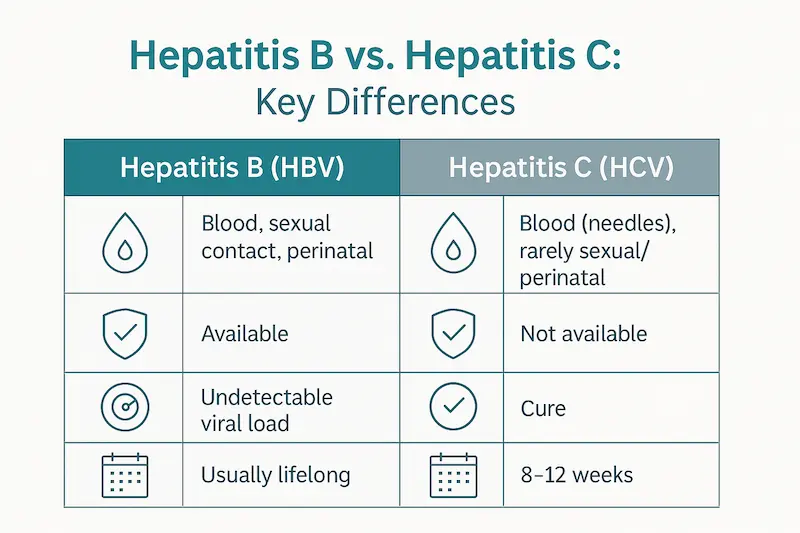
HBV is most commonly transmitted through contact with infected blood, semen, or other body fluids. This can occur through sexual contact, sharing needles, or from a mother to her baby during birth. Fortunately, there is a highly effective hepatitis B vaccine that provides robust protection against the virus. For those who already have chronic HBV, effective HBV treatment aims to suppress the virus, reducing the risk of liver damage and improving long-term health.
What is Hepatitis C?
Hepatitis C is an infection of the liver caused by the Hepatitis C virus (HCV). Unlike Hepatitis B, a significant majority of people who contract HCV—about 75% to 85%—will develop a chronic infection. Chronic Hepatitis C can be a silent disease for many years, slowly causing liver inflammation that can lead to severe scarring (cirrhosis), liver failure, and an increased risk of liver cancer. Understanding what is hepatitis c and its potential long-term impact is crucial for seeking timely care. The availability of effective HCV treatment in Turkey has transformed the prognosis for patients worldwide.
How is hepatitis c transmitted? The virus spreads primarily through contact with infected blood. The most common route of transmission today is through sharing needles or other equipment used to prepare and inject drugs. Before widespread screening of blood supplies began in 1992, many people were infected through blood transfusions and organ transplants. The question, “is hepatitis c curable?” now has a definitive answer: yes. Modern antiviral therapies have made the complete cure of Hepatitis C a reality for most patients, making expert HCV treatment more critical than ever.
Common Symptoms of HBV and HCV
Many people with acute or chronic Hepatitis B or C have no symptoms and are unaware they are infected. When symptoms do appear, they can be similar for both viruses and are often mistaken for the flu or other common illnesses. This is why screening is so important, especially if you have risk factors. When present, the most common hepatitis c symptoms and hepatitis b symptoms can overlap significantly.
Key takeaway: Early detection is vital because treatments are most effective before significant liver damage occurs. If you experience a combination of these symptoms or have been exposed to a risk factor, seeking medical evaluation is essential. Comprehensive diagnostic services in Turkey can provide a clear picture of your liver health and determine the best course for HCV treatment in Turkey or HBV management.
Quick list: Common liver disease symptoms associated with both HBV and HCV include:
- Fatigue or feeling very tired
- Fever
- Nausea and vomiting
- Abdominal pain, especially in the upper right quadrant near the liver
- Loss of appetite
- Dark urine
- Clay-colored stools
- Joint pain
- Jaundice (yellowing of the skin and eyes)
Recognizing these symptoms is important, but diagnosis can only be confirmed through specific blood tests. If you are experiencing any of these issues or are concerned about potential exposure, seeking medical evaluation is a critical step. Our clinics in Turkey provide rapid and accurate testing to determine your status and guide you toward the best course of action, whether it be HBV management or a curative HCV treatment in Turkey.
Innovative Treatment Approaches
The landscape of hepatitis treatment has been revolutionized in the last decade, with yesterday’s lifelong struggles becoming today’s short-term, curative therapies. Our approach in Turkey is defined by these innovations, focusing on eradicating the virus while supporting your overall well-being. The cornerstone of modern HCV treatment in Turkey is the use of powerful, targeted antiviral medications that offer a cure for the vast majority of patients. We combine these medical breakthroughs with comprehensive support systems, ensuring that your treatment is not only effective but also manageable and holistic, paving the clearest path to a full recovery and a healthy future.
Latest Advances in Antiviral Therapy
Key takeaway: The new treatment of HCV involves Direct-Acting Antivirals (DAAs), which are oral medications that attack the virus directly, leading to a cure in over 95% of cases. These treatments are short, typically lasting only 8 to 12 weeks, and have far fewer side effects than older interferon-based therapies. For chronic HBV, modern antiviral drugs effectively suppress the virus, preventing liver damage and reducing the risk of transmission.
The current HCV treatment guidelines universally recommend DAAs. These pills work by blocking specific proteins the hepatitis C virus needs to replicate. This targeted approach is incredibly effective and a significant leap forward in medicine. For those seeking HCV treatment in Turkey, this means access to the same gold-standard medications available in the US or Western Europe. For HBV, while a cure is not yet common, treatments like Tenofovir or Entecavir are highly effective at controlling the virus long-term. Our hepatologists follow the latest HBV treatment algorithm to personalize therapy, minimizing viral load and protecting your liver from further harm.
Integrative Approaches for Better Outcomes
Key takeaway: Achieving the best results goes beyond medication alone. Our clinics champion an integrative approach that treats the whole person, not just the virus. This model combines advanced medical therapy with crucial lifestyle and wellness support, including nutritional guidance, management of co-existing health conditions, and mental health resources to enhance the success of your HCV treatment in Turkey.
A healthy liver is better equipped to heal. Our teams include dietitians who provide tailored nutritional plans to reduce liver fat and inflammation, which can improve treatment outcomes. Managing conditions like diabetes and obesity is also critical, as they can accelerate liver disease. We provide coordinated care to manage all aspects of your health. Furthermore, a diagnosis of hepatitis can be emotionally taxing. We offer counseling and support to help you manage the stress and anxiety that can accompany treatment, ensuring you feel supported every step of the way. This comprehensive care model is central to our philosophy and success.
Current Research Efforts in Turkey
Key takeaway: Turkey is a significant contributor to the global advancement of hepatology. Leading Turkish universities and our affiliated medical centers are actively involved in clinical research and trials for liver diseases. This commitment to innovation ensures that our patients benefit from the very latest medical knowledge and therapeutic options for both HBV and HCV treatment in Turkey.
By choosing to receive care here, you are stepping into an ecosystem of medical excellence. Our specialists are not just practitioners; many are also respected researchers and academics who help shape the future of hepatitis treatment. This direct link to the world of research means our HCV treatment guidelines are always up-to-date, and we are often among the first to adopt promising new therapies. This dedication to science and research underscores our commitment to providing the absolute best care and positions our institution as a leader in the successful management and cure of viral hepatitis.
Cost Considerations for HBV and HCV Treatments
One of the most significant advantages of seeking care in Turkey is the remarkable affordability of world-class medical treatment. We believe that financial constraints should not be a barrier to accessing life-saving therapies. The overall HCV treatment cost in our facilities is substantially lower than in many Western countries, making a cure accessible to a global audience. This section provides a transparent overview of the costs associated with your care, including detailed pricing for HCV treatment in Turkey and information on financial logistics, so you can plan your medical journey with confidence and peace of mind.
Pricing Insights Across Istanbul
Key takeaway: The most compelling reason many patients choose Turkey is the cost. A complete 12-week course of curative, new-generation antiviral HCV treatment in Turkey, including all consultations and diagnostic tests, typically ranges from $3,500 to $7,500 USD. This is a fraction of the cost in the U.S. or EU, where the same medications can exceed $50,000. For HBV, ongoing management is also significantly more affordable.
This dramatic price difference is not due to a lower quality of care or medication. It is a result of different pharmaceutical pricing structures and the country’s overall economic landscape. Our pricing is transparent and all-inclusive, meaning the quote you receive covers the entire treatment package.
What’s typically included in an HCV treatment package?
- Initial Consultation: A comprehensive evaluation with a top-tier hepatologist.
- Diagnostic Tests: All necessary blood work, including viral load (HCV-RNA) tests and genotyping, before, during, and after treatment.
- Medication: A full 8 or 12-week course of the latest Direct-Acting Antivirals (DAAs).
- Follow-up Appointments: Monitoring your progress to ensure the treatment is successful.
For chronic HBV, which requires long-term management, the annual cost for medication and monitoring in Turkey is also substantially lower, making sustainable, lifelong care a feasible reality for our international patients. This affordability makes premier HCV treatment in Turkey an intelligent choice.
Insurance Coverage and Financial Assistance
Key takeaway: While we operate on a direct-payment basis, we are committed to helping you navigate reimbursement with your international insurance provider. Our administrative team provides a complete set of detailed medical reports, invoices, and prescriptions in English that you can submit to your insurer upon returning home. Many patients find the total out-of-pocket cost is still less than their insurance co-pay would be in their home country.
Navigating international insurance claims can be complex. For this reason, and to maintain our streamlined and affordable pricing, patients typically pay for their care directly at our facility. We accept various forms of payment, including credit cards and bank transfers, to make the process as smooth as possible. Our financial counselors will provide you with a clear, itemized quote before you commit to any treatment, ensuring there are no hidden fees or surprises.
Our patient support team specializes in providing the necessary documentation to support your claim for reimbursement. Even if your plan does not cover treatment abroad, the exceptional value of receiving hcv treatment in Turkey means that a complete medical trip—including flights, accommodation, and the entire treatment course—often proves to be the most economically sound option for achieving a cure. We are dedicated to making this life-changing HCV treatment accessible.
Leading Clinics and Hospitals for Hepatitis Treatment
Choosing where to receive your care is the most important decision you will make. Turkey is home to a robust network of modern, internationally accredited medical centers, particularly in Istanbul, that are recognized for their excellence in treating liver diseases. Our institution stands out as a leader in this field, combining state-of-the-art facilities with a deeply personalized approach to patient care. We provide a seamless medical journey for international patients, making the process of receiving HCV treatment in Turkey as stress-free and successful as possible. Our reputation is built on a foundation of superior medical outcomes, technological advancement, and compassionate, patient-first care.
Top Medical Centers in Turkey
Key takeaway: The best clinics for hepatitis care in Turkey are distinguished by their international accreditations, such as from the Joint Commission International (JCI), which signify adherence to the highest global standards of safety and quality. These centers feature advanced diagnostic technology and are staffed by multidisciplinary teams led by highly experienced hepatologists.
When searching for the best clinic for HCV treatment on Turkey, look for facilities that offer a comprehensive service. Our hospital is proud to be JCI-accredited, reflecting our unwavering commitment to excellence. We utilize the latest diagnostic tools, such as FibroScan, to assess liver health non-invasively, and our on-site laboratories ensure rapid and accurate viral load testing. Our medical team consists of board-certified hepatologists, radiologists, and infectious disease specialists who collaborate on each case, ensuring you receive a holistic and well-coordinated treatment plan. This team-based approach is crucial for managing both straightforward and complex cases of HBV and HCV.
Finding the best doctor for HCV treatment on Turkey is about more than just credentials; it’s about experience and approach. Our leading hepatologists have trained at prestigious institutions in the US and Europe and have years of dedicated experience in managing viral hepatitis. They are not only experts in the latest HBV treatment guidelines and HCV treatment protocols but are also known for their empathetic and communicative approach. They take the time to explain your condition and treatment options clearly, empowering you as a partner in your own healthcare journey.
Patient Reviews and Success Stories
Key takeaway: The most reliable measure of a clinic’s quality is the experience of its patients. Our history is rich with success stories from individuals who traveled to Turkey for care and returned home cured and healthy. These testimonials highlight our clinical excellence and the compassionate, supportive environment we cultivate for every patient seeking HCV treatment in Turkey.
Consider the story of John, a 58-year-old from the United States who had been living with a chronic Hepatitis C diagnosis for over 15 years. Frustrated by the prohibitive cost of treatment back home, he discovered the possibility of affordable HCV treatment in Turkey. From his first video consultation to his arrival in Istanbul, our international patient team coordinated every detail. His treatment with DAAs was successful in just 12 weeks, and his final viral load test showed the virus was “not detected.” John often speaks of the warmth and professionalism of our staff as being just as important as the cure itself.
Another common story is that of Fatima, a 45-year-old from the Gulf region, who needed ongoing management for her chronic Hepatitis B. She was concerned about the long-term side effects and wanted a doctor who was up-to-date on the latest HBV treatment strategies. She found that expert in our clinic. We developed a personalized plan using modern antiviral medication that effectively suppressed her HBV with minimal impact on her daily life. She now travels to Istanbul for her annual check-ups, confident that she is receiving the best possible care to protect her liver for the long term. These stories are the true testament to our success.
Success Rates of HBV and HCV Treatments
The ultimate measure of any medical treatment is its success rate. For viral hepatitis, the news is overwhelmingly positive. Modern medicine has transformed the prognosis for patients, particularly for Hepatitis C, which is now one of the most curable chronic viral illnesses. At our clinics in Turkey, we consistently achieve success rates that meet and often exceed global benchmarks. We are committed to providing treatments that don’t just manage symptoms but deliver a definitive cure or long-term viral suppression. This focus on outcomes is central to our mission and provides hope and certainty to those seeking HCV treatment in Turkey.
Case Studies of Successful Treatments
Key takeaway: With today’s advanced Direct-Acting Antiviral (DAA) medications, the cure rate for Hepatitis C is over 95%. This success, known as a Sustained Virologic Response (SVR), means the virus is permanently cleared from your body. Our institution proudly mirrors these high success rates, providing a reliable path to a cure for nearly every patient who undergoes HCV treatment in Turkey.
A “cure” for Hepatitis C is a clinical term with a precise definition. It is achieved when a blood test shows the virus is undetectable 12 weeks after you finish your treatment. This is SVR, and it is the universal goal of HCV therapy. The question, “is hepatitis c curable?” can now be answered with a resounding “Yes.”
Quick List: HCV Cure Rates with Modern DAAs
- Overall Population: >95%
- Patients with Cirrhosis: >95%
- Patients who failed previous treatments: >95%
Let’s consider the case of a patient named Michael, a 62-year-old engineer from Canada with HCV Genotype 3 and compensated cirrhosis, a condition that once made treatment more complex. After being quoted an exorbitant sum for treatment at home, he came to our clinic in Istanbul. We initiated a 12-week regimen with an appropriate DAA combination. He tolerated the medication well with minimal side effects. Twelve weeks after completing his therapy, his HCV RNA test came back “not detected.” Today, Michael is cured of Hepatitis C, and regular monitoring shows his liver function is stable, having been protected from further viral damage.
Long-term Impact and Follow-up
Key takeaway: The benefits of successful treatment extend far beyond simply clearing the virus. Curing Hepatitis C halts the progression of liver disease, significantly reduces the risk of developing liver cancer, and can even reverse liver scarring in some cases. For Hepatitis B, effective long-term treatment dramatically lowers the risk of similar complications, ensuring better long-term health and quality of life.
Once HCV is cured, the constant assault on your liver stops. This allows the liver’s remarkable regenerative capabilities to begin healing. Patients often report a significant increase in energy and a decrease in symptoms like fatigue and joint pain. While the risk of liver cancer is drastically reduced, it is not eliminated entirely, especially if significant cirrhosis was present before treatment. Therefore, ongoing follow-up is essential. For HBV patients, successful suppression of the virus with antiviral therapy is the key to preventing disease progression and maintaining liver health for decades.
Our commitment to your health doesn’t end when your treatment course does. We provide a comprehensive long-term follow-up plan for our international patients.
- Step 1: Post-Treatment Monitoring. We provide clear instructions for the SVR12 blood test you will need to get in your home country to confirm the cure.
- Step 2: Personalized Long-Term Plan. Based on your pre-treatment liver health, we provide a schedule for ongoing monitoring, which may include periodic ultrasounds or blood tests.
- Step 3: Open Communication. We offer telemedicine consultations for follow-up questions and are happy to communicate directly with your local physician to ensure a smooth transition of care. This robust follow-up for your HCV treatment in Turkey ensures your long-term health remains the top priority.
Tailored Treatment Approaches by Gender
Effective healthcare is never one-size-fits-all. While the viruses that cause Hepatitis B and C are the same for everyone, we recognize that biological and lifestyle differences between genders can influence the progression of the disease and the overall treatment experience. Our medical experts provide nuanced, personalized care that respects these differences, ensuring that every patient receives the most appropriate and effective treatment. This tailored strategy is a key part of our commitment to excellence in both HBV and HCV treatment in Turkey, addressing the unique health journey of every individual.
Addressing Specific Needs for Women
Key takeaway: For women, the management of HBV and HCV requires special consideration regarding pregnancy, family planning, and hormonal health. Our specialists are experienced in navigating these factors to provide safe and effective treatment that aligns with a woman’s life stages and personal goals, making our approach to HCV treatment in Turkey both comprehensive and compassionate.
One of the most critical considerations for women is the prevention of mother-to-child transmission. For expectant mothers with chronic HBV, our doctors may recommend antiviral therapy during the third trimester to lower the viral load, drastically reducing the risk of transmitting the infection to the baby. For HCV, since modern DAA medications are generally not recommended during pregnancy or breastfeeding, we focus on pre-conception counseling. The ideal strategy is to undergo curative HCV treatment in Turkey before planning a family, ensuring both mother and baby are safe.
Our physicians always conduct thorough consultations that include discussions about family planning and contraception. We ensure that any treatment plan is compatible with a woman’s reproductive health choices. Furthermore, we consider the entire health profile, including hormonal changes like menopause, which can sometimes influence the progression of liver fibrosis. By taking these factors into account, we provide a truly personalized and responsible care plan.
Specialized Treatment Protocols for Men
Key takeaway: For men, specialized treatment protocols often involve a strong focus on managing co-existing lifestyle factors that can accelerate liver damage, such as alcohol consumption and metabolic syndrome. Our integrative care model is designed to address these risks concurrently, improving the overall success of both HBV and HCV treatment in Turkey.
Statistically, men tend to have higher rates of certain risk factors that act as “disease accelerators” when combined with viral hepatitis. For example, regular alcohol use can significantly speed up the rate of liver scarring in individuals with HBV or HCV. Similarly, conditions like obesity, high cholesterol, and fatty liver disease—collectively known as metabolic syndrome—are more prevalent in men and can complicate the health of the liver. Answering the question “what is hepatitis c?” must also involve understanding these risk factors.
Our treatment protocols for men are therefore highly integrative. Alongside prescribing the most effective antiviral medications, our teams work with patients on crucial lifestyle modifications. This includes personalized nutritional counseling to combat fatty liver and support liver regeneration, as well as clear guidance on avoiding alcohol to maximize the benefits of treatment. Some research also suggests that liver disease progression may be faster in men compared to pre-menopausal women, making early and aggressive treatment even more vital. We prioritize proactive care to halt the disease before significant damage occurs, ensuring the best possible long-term outcomes for our male patients undergoing HCV treatment in Turkey.
FAQs About HBV and HCV Treatment in Turkey
Embarking on a medical journey abroad naturally comes with questions. We understand that clarity and confidence are essential when you are making important decisions about your health. In this section, we provide direct and transparent answers to some of the most frequently asked questions about receiving care in our country. Our goal is to demystify the process and provide you with the practical information you need to confidently choose our institution for your HBV or HCV treatment in Turkey.
Is Treatment in Turkey Safe?
Key takeaway: Absolutely. Receiving medical care in a top-tier, internationally accredited Turkish hospital is exceptionally safe. Our institution adheres to the highest global standards of patient safety and quality, evidenced by our Joint Commission International (JCI) accreditation. The medications we use are the same world-class, approved pharmaceuticals available in the US and Europe.
Safety is our paramount concern. Our JCI accreditation means we are regularly audited against rigorous standards covering everything from infection control and surgical safety to medication management. The antiviral drugs used for HCV treatment in Turkey are genuine, globally recognized medications. Concerns about HCV treatment side effects are also minimal with modern Direct-Acting Antivirals (DAAs), which are known for being highly effective and very well-tolerated, with far fewer side effects than older interferon-based therapies. You can be confident that your care will be both safe and of the highest quality.
Duration of Treatment
Key takeaway: The duration of treatment varies significantly between Hepatitis B and Hepatitis C. A curative course of HCV treatment in Turkey is remarkably short, typically lasting just 8 or 12 weeks. In contrast, treatment for chronic Hepatitis B is a long-term commitment, often requiring daily medication for many years, or even lifelong, to keep the virus suppressed.
Quick List: Typical Treatment Durations
- Hepatitis C: A full course of oral DAA medication is taken daily for a fixed period, usually 8 or 12 weeks. The exact length is determined by your specialist based on your virus genotype and liver condition. Many international patients visit us for their initial consultation and to receive their full supply of medication, which they can conveniently take back home.
- Hepatitis B: Treatment for HBV is about long-term management, not a short-term cure. It involves taking an oral antiviral pill once a day. This therapy is highly effective at stopping the virus from replicating and preventing further liver damage. Our specialists will create a sustainable, long-term plan for you.
Long-term Effects and Follow-up Care
Key takeaway: The long-term effect of a successful HCV treatment in Turkey is life-changing: it halts liver damage, dramatically reduces the risk of liver cancer, and allows the liver to begin healing. For HBV, long-term therapy preserves liver function and prevents disease progression. Our commitment to you continues long after your initial treatment, with robust follow-up care plans.
After you complete your HCV treatment, the most important follow-up step is a blood test 12 weeks later to confirm the virus is gone—this is the “SVR” or cure. If you had significant liver scarring (cirrhosis) before treatment, we will provide a schedule for ongoing monitoring, such as periodic ultrasounds, which can be done with your local doctor. We provide a clear, written plan and are always available for telemedicine consultations to ensure seamless long-term care.
For our HBV patients on long-term therapy, continuous care is key. We establish a follow-up schedule that includes regular blood tests to monitor your viral load, liver function, and overall health. We empower you with a comprehensive understanding of your condition and a clear path forward, ensuring you receive the full, lifelong benefits of your treatment. This dedication to follow-up is a cornerstone of our service.
Explore Other World-Class Treatments in Turkey
Key takeaway: Your journey to health is our priority. While you have learned about our specialized hepatitis programs, our institution’s commitment to medical excellence spans a comprehensive range of advanced specialties. We are a premier destination for international patients seeking a variety of complex medical and surgical solutions.
Our dedication to providing world-class care extends far beyond hepatology. We invite you to explore our other leading medical departments, each staffed by renowned specialists using state-of-the-art technology. Many patients confidently travel to our facility for life-saving procedures such as liver transplant and advanced oncological care for liver tumor treatment. Our neurosurgery center is a leader in intricate procedures like brain tumor surgery, spinal tumor surgery, discectomy surgery, and transformative scoliosis surgery. Additionally, our highly respected plastic surgery department offers a full spectrum of aesthetic and reconstructive procedures to enhance well-being. Whatever your health needs may be, our integrated teams are here to offer the same exceptional standard of care and compassion.