Skip to content
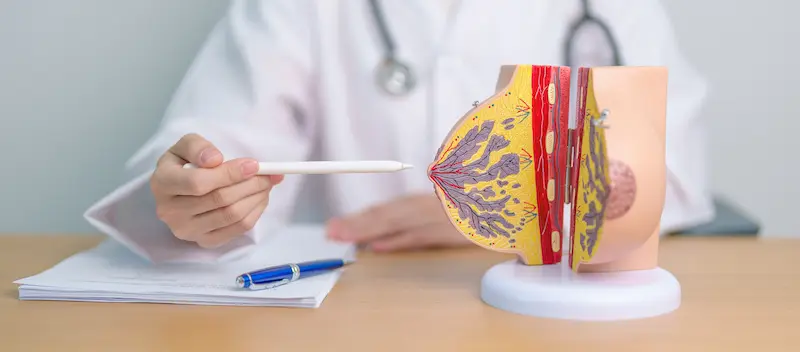
Spotting the early signs of breast cancer empowers you to act before small changes become bigger problems. This patient-friendly guide explains the breast cancer symptoms most likely to appear first, how to examine your breasts accurately, and when to book imaging. We also address male breast cancer symptoms, because anyone can be affected. If you are planning rapid evaluation in Turkey, accredited oncology teams can coordinate same-week diagnostics and individualized breast cancer treatment, which supports a stronger breast cancer survival rate. Keep this resource handy as you learn the first signs of breast cancer and how to respond with confidence.
Table of Contents

Painless Breast Lump or Area of Thickening
How a Cancerous Lump Typically Feels (hard, irregular, fixed)
A painless breast lump is the classic early clue many people overlook. A suspicious breast cancer lump often feels hard, irregular, and less mobile than benign nodules. Pay attention to any new bump or breast thickening that persists beyond one menstrual cycle. While online pictures of breast cancer lumps and early signs of breast cancer pictures can raise awareness, your hands and mirror are more reliable. Treat any persistent nodule as one of the 7 early signs of breast cancer and act promptly.
Benign vs Suspicious: Cyst, Fibroadenoma, or Something Else?
Benign cysts tend to feel round, smooth, and springy; fibroadenomas are rubbery and mobile. Concern rises when a mass is rock-firm, has jagged edges, or seems tethered to deeper tissue. Combined findings—such as contour distortion or skin change—raise alarm for breast cancer signs of malignancy. Keep a symptom journal so your clinician can correlate signs breast cancer symptoms with exam and imaging. When in doubt, assume the safer path and request a targeted assessment.
What to Do Next: Imaging and Biopsy Pathway
Timely imaging matters. A focused ultrasound and mammogram are standard, followed by image-guided core biopsy if needed. In Turkey’s accredited centers, fast-track pathways compress testing and, when indicated, begin tailored breast cancer treatment quickly—an approach associated with a better breast cancer survival rate. Travelers receive navigator support for appointments and translations, minimizing delays. Do not wait for pain; absence of discomfort does not exclude symptoms of breast cancer or other breast cancer symptoms that need clarification.
New Change in Breast Size or Shape
Asymmetry and Contour Changes to Watch For
Notice sudden one-sided fullness, a flattened area, or a new fold near the areola. Persistent unexplained breast swelling on one side can signal lymphatic obstruction or an underlying mass and belongs among the 7 warning signs of breast cancer people often miss. Compare recent photos to your baseline. If you also feel underarm fullness, consider that swollen lymph nodes in armpit sometimes accompany shape change and should be assessed.
Checking in the Mirror: Arm-Raise and Lean-Forward Tests
Stand before a mirror with arms at your sides, then overhead, then lean forward. Movement can reveal hidden tethers or dimples. Document what you see in good light; still images help your clinician more than generic early signs of breast cancer pictures from the internet. When a contour shift appears with a lump or nipple change, escalate promptly. Early action aligns with the spirit of 7 early signs of breast cancer lists: small clues deserve big attention.
Hormonal, Postpartum, or Weight-Related Changes vs Red Flags
Hormones, breastfeeding, and weight shifts can temporarily alter size and density. Red flags include unilateral enlargement that persists, progressive distortion, or a drifting nipple position. These patterns represent breast cancer signs of structural pull from deeper tissue. Stay mindful of male breast cancer symptoms such as firm, one-sided enlargement with a central mass. Travelers to Turkey can access same-week imaging at JCI-accredited facilities, keeping momentum from suspicion to diagnosis without compromising comfort or safety.
Skin Changes: Dimpling, Puckering, or Peau d’Orange
What These Skin Changes Look Like and Why They Happen
Surface texture matters. Breast dimpling appears as tiny indentations that may deepen with motion. The orange-peel look called peau d’orange—also written peau d’orange—reflects lymphatic congestion that thickens skin and enlarges pores. These alterations can accompany first signs of breast cancer even when a lump is hard to feel. Persistent texture change is among the 7 early signs of breast cancer that warrant prompt, in-person evaluation.
Redness or Warmth: Mastitis vs Inflammatory Breast Cancer
A red or warm breast during lactation often suggests infection; however, rapid swelling and color change without improvement on antibiotics demand urgent reassessment. Hallmark inflammatory breast cancer symptoms include sudden enlargement, warmth, and heavy skin thickening without a distinct mass. Many clinicians use the shorthand inflammatory ca breast in notes when describing inflammatory breast cancer. Immediate imaging and specialist review are essential because delays can affect stage and outcomes.
When to Seek Same-Week Evaluation
Skin tethering, evolving dimples, or orange-peel texture belong among the 7 warning signs of breast cancer that justify same-week care. Escalate sooner if changes occur with nipple inversion, nipple discharge, or bloody nipple discharge, or if you notice nipple rash or scaling consistent with Paget’s disease nipple symptoms. Add focal tenderness to your log as localized breast pain can coexist with surface changes. Swift triage in Turkey’s oncology hubs preserves options, improves timelines, and aligns with best practices for people tracking the early signs of breast cancer and broader symptoms of breast cancer.
Nipple Inversion, Position Change, or Scaling Rash
New vs Lifelong Inversion: How to Tell the Difference
A new-onset nipple inversion—especially on one side—deserves attention because it can be among the early signs of breast cancer. Many people naturally have nipples that invert or evert since puberty; that lifelong pattern is usually harmless. Concerning patterns are new inversion, asymmetry compared with the other nipple, or inversion that fluctuates with a visible pull on nearby skin. If a change persists beyond one menstrual cycle, treat it as one of the 7 early signs of breast cancer and request targeted imaging to clarify whether deeper tissue is tugging the ductal system.
Paget’s Disease Clues: Eczema-Like Rash on the Nipple
An eczematous patch limited to the nipple–areola complex can indicate Paget’s disease nipple symptoms. Unlike routine dermatitis, this nipple rash or scaling often resists moisturizers and recurs in the same area. It may crust, itch, or weep, and can coexist with subtle nipple discharge. Because Paget’s disease stems from underlying ductal changes, clinicians often pair mammography with ultrasound or MRI. Treat a persistent nipple rash as part of the first signs of breast cancer, not merely a skin problem.
Subtle Position Shifts or Retraction During Movement
Stand before a mirror and watch the nipple while raising your arms or leaning forward. Small downward drifts, off-center pointing, or partial retraction with motion can reflect internal tethering. These movement-linked shifts are early, objective clues among breast cancer symptoms and can appear before a mass is palpable. Capture a clear photo series to show your clinician; documenting these symptoms of breast cancer supports faster decisions and helps differentiate benign variation from structural change.
Unusual Nipple Discharge (bloody or clear)
Types of Discharge: Unilateral, Spontaneous, and Concerning Colors
Discharge that is spontaneous (without squeezing), from a single duct, and on one side is more worrisome than milky or greenish discharge from both breasts. Clear, watery, or bloody nipple discharge should prompt evaluation because it can accompany intraductal lesions. Remember, nipple discharge alone rarely proves cancer, yet in the context of other early signs of breast cancer, it raises the index of suspicion. Log the side, color, timing, and whether it stains clothing without pressure.
Common Non-Cancer Causes (Duct Ectasia, Papilloma, Medications)
Many discharges are benign. Duct ectasia widens the ducts, causing sticky or greenish fluid; intraductal papillomas can produce blood-tinged discharge without a mass. Certain medications and hormonal shifts can stimulate ducts as well. Even so, unilateral, persistent discharge is counted in lists of 7 early signs of breast cancer because it overlaps with malignant conditions. A careful workup distinguishes everyday causes from breast cancer signs of ductal disease that need treatment.
Diagnostic Steps: Duct Ultrasound, Mammogram, and Cytology
Evaluation typically starts with targeted ultrasound to trace the duct, plus mammography to find calcifications or architectural distortion. If fluid is available, cytology may be performed, and suspicious imaging leads to core biopsy. In Turkey, accelerated breast clinics can coordinate same-day imaging and translation, streamlining care for international patients while maintaining high standards of breast cancer treatment. Acting early supports a better breast cancer survival rate, especially when discharge coexists with other signs breast cancer symptoms.
Swollen Lymph Nodes in the Underarm or Collarbone
How to Feel for Nodes: Size, Firmness, and Mobility
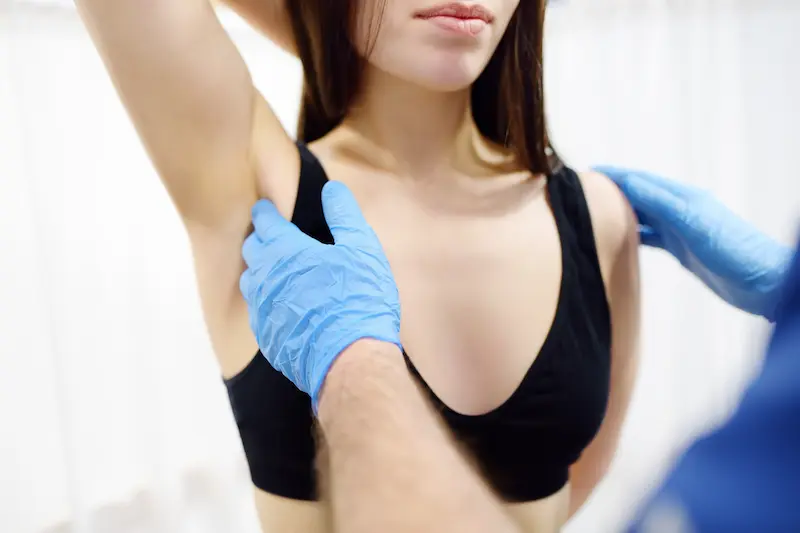
Use gentle circular motions high in the armpit and along the collarbone. Benign nodes are usually small, soft, and mobile. Nodes that are firm, enlarged, or matted can signify regional spread and belong among 7 early signs of breast cancer that should not be ignored. If you detect swollen lymph nodes in armpit on one side, recheck after your next menstrual period or after any cold resolves. Persistence beyond two to three weeks warrants imaging.
Infections and Other Causes of Lymph Node Swelling
Respiratory infections, skin irritation from shaving, or minor injuries can enlarge nodes temporarily. Breastfeeding issues such as mastitis also cause reactive swelling. However, persistent, one-sided fullness—especially with a breast change—fits the early signs of breast cancer profile. In men, firm underarm nodes with a subareolar mass are notable male breast cancer symptoms and should prompt urgent evaluation. When in doubt, escalate rather than watch and wait.
Imaging and Staging if Nodes Stay Enlarged
If nodes remain enlarged, clinicians may order ultrasound of the axilla, mammography, and, when needed, needle sampling. Imaging clarifies whether the cortex is thickened or the fatty hilum is lost. When pathology confirms involvement, staging studies guide therapy choices, from surgery to systemic options. International patients in Turkey benefit from coordinated pathways that compress appointments and expedite tumor board review—an approach aligned with the principle that acting on early signs of breast cancer improves timelines and options across the care journey.
Persistent, Localized Breast Pain or Tenderness
When Breast Pain May Signal Cancer (Focal, Constant, Unilateral)
Breast pain is common and usually benign. It becomes more concerning when it is focal, occurs in the same spot, and persists despite a full cycle. This pattern is called localized breast pain. It can represent early tissue change even when no lump is obvious. If pain concentrates in one quadrant, worsens at night, or is linked to a subtle skin or nipple change, treat it as part of the early signs of breast cancer rather than a routine ache. Do not wait for swelling or discharge to appear before you act.
Typical Non-Cancer Causes (Cysts, Costochondritis, Hormones)
Many tender spots come from cysts that expand with the cycle, costochondritis near the breastbone, or general hormonal sensitivity. Poor bra fit, recent workouts, or minor injuries can also trigger soreness. These causes usually shift over time or improve with rest and anti-inflammatories. If the tender area does not migrate and you also notice any other breast cancer symptoms, escalate to your clinician. Distinguishing everyday pains from significant symptoms of breast cancer is not always possible at home.
Tracking Symptoms and When to Request Imaging
Keep a brief diary describing the location, intensity, and timing. Note any relation to your period, new medications, or stressful weeks. If pain persists for two to three weeks, or if it is strictly one-sided, request targeted ultrasound. Mammography may be added depending on age and risk. International patients in Turkey can access rapid diagnostic packages with same-week imaging, interpretation, and surgical consults. Fast, coordinated care supports wise decisions about breast cancer treatment while avoiding unnecessary delays.
Breast Self-Awareness: How to Check and What’s “Normal”
Self-awareness is about knowing your own baseline. Set a monthly check at the same point in your cycle. In good light, inspect both breasts with arms at your sides, overhead, and then leaning forward. You are looking for new asymmetry, dimples, or texture change such as peau d’orange or breast dimpling. Palpate with the pads of three fingers in small circles from the collarbone to the bra line and from breastbone to underarm.
Use medium pressure in three passes: light for skin, moderate for glandular tissue, deeper for the chest wall. Include the tail of Spence high in the armpit where hidden fullness may indicate swollen lymph nodes in armpit. Check each nipple for ease of eversion and gentle expression. Unprovoked fluid is more worrisome than discharge that appears only with firm pressure. Keep brief notes or photos so you can compare month to month instead of relying on memory.
Normal can vary. Many people have lumpy or nodular areas that stay stable over years. Lifelong inversion that flips out with warmth is usually harmless. What is not normal is a new, persistent change that does not resolve. If you are unsure, schedule a clinical breast exam. Travelers to Turkey can bring prior reports and images on a USB drive to avoid repeat scans and to speed triage within accredited oncology centers focused on patient safety and comfort.
For men, do a quick monthly check in the shower. A firm, painless subareolar nodule, skin change, or nipple deviation should be assessed promptly. These patterns align with male breast cancer symptoms and deserve the same attention given to women’s concerns. Early recognition supports timely diagnosis, which in turn improves the path to care and contributes to stronger breast cancer survival rate statistics at a population level.

Noticing a Change? Step-by-Step Next Actions and When to See a Doctor
Act within days, not months. First, write down what you noticed, when it started, and any factors that make it better or worse. Second, perform a mirror review and gentle palpation on both sides to verify that the finding is real and one-sided. Third, contact a breast clinic for targeted ultrasound and mammography when indicated. Mention any nipple inversion, nipple discharge, bloody nipple discharge, unexplained breast swelling, or persistent localized breast pain, since clusters of findings strengthen the case for imaging.
If you are arranging evaluation in Turkey, choose an internationally accredited hospital or comprehensive breast unit. Ask for a same-week package that includes imaging, image-guided biopsy if needed, and a consultation with a surgical oncologist or medical oncologist. Request an English-speaking coordinator and written results. Consolidating steps limits travel days and accelerates decisions about breast cancer treatment. Whether you live locally or you are visiting for care, the goal is the same: respond to the early signs of breast cancer quickly, confidently, and with expert guidance so that small clues lead to timely answers and the best possible outcome.
Frequently Asked Questions:
What age should I start routine mammograms, and how often?
Most people start at 40; repeat every 1–2 years. Start earlier or add MRI if you’re high-risk—ask your clinician.
Do breast implants or prior surgery change my screening plan?
You can still have mammograms. Tell the technologist—implant-displacement views and, if needed, ultrasound/MRI improve visibility.
Which risk factors raise my chance, and what lowers it?
Higher risk: age, BRCA/family history, prior chest radiation, dense breasts, alcohol, obesity. Lower risk: maintain healthy weight, exercise, limit alcohol, don’t smoke, breastfeed if possible, keep up with screening.
How can international patients arrange fast, English-supported diagnostics in Turkey?
Contact an accredited breast center, share prior reports, and request a coordinated 1–3 day package (imaging ± biopsy, specialist consult) with an English-speaking coordinator.
What does a breast lump feel like?
Often firm, irregular, and less mobile; benign lumps are usually smooth and rubbery. Any new or persistent painless breast lump or breast thickening should be imaged within 1–2 weeks.
What are the 5 warning signs of breast cancer?
– New painless breast lump or breast thickening
– One-sided size/shape change or unexplained breast swelling
– Skin changes: breast dimpling, peau d’orange, or red or warm breast
– Nipple changes: nipple inversion, nipple rash or scaling, or nipple discharge (especially bloody nipple discharge)
– Underarm/collarbone swollen lymph nodes in armpit or persistent localized breast pain