Choosing Turkey for your rhinoplasty is an excellent decision for quality and affordability, but understanding the Nose Job Recovery process is equally important. This guide explains what to expect after surgery—from your first 72 hours to long-term healing—so you can prepare both physically and mentally for every stage of recovery.
Table of Contents
The First 72 Hours: What to Expect Immediately After Surgery
The first three days after rhinoplasty are crucial for healing and comfort. Your body is adjusting to anesthesia, swelling, and the new nasal structure. During this time, your surgeon will closely monitor your condition, ensuring your breathing, pain management, and hygiene are properly handled. Understanding these early reactions helps reduce anxiety and sets realistic expectations for your rhinoplasty recovery timeline.

Managing Pain and Discomfort
Mild to moderate pain is normal in the early hours of Nose Job Recovery. Most patients describe a sensation of pressure rather than sharp pain. Surgeons in Turkey typically prescribe pain relievers and cold compresses to reduce swelling. Avoid bending forward, sneezing, or heavy facial movements, as these may increase discomfort or cause bleeding.
Waking Up from Anesthesia
As you regain consciousness, you may feel groggy or slightly nauseous. Nurses will assist you with hydration and ensure oxygen levels remain stable. Breathing through your mouth might feel dry or tiring, but this will ease within a day or two. The first few hours are for rest and hydration—your focus should be on staying calm and still.
Dealing with Nasal Packing and Drip Pads
Many Turkish surgeons use soft nasal packing or silicone splints to support internal healing. Drip pads beneath your nostrils will catch minor bleeding for the first 24–48 hours. This is normal and shouldn’t cause alarm. Keeping your head upright and changing pads as instructed will prevent infection and discomfort.
The First Night: Rest and Elevation
Sleeping with your head elevated is one of the most important rhinoplasty recovery tips. Use two or three pillows or a wedge cushion to keep your head at a 30–45-degree angle. This reduces swelling and supports drainage. Try to sleep on your back to avoid pressure on the nose, and ensure your hotel environment in Turkey is quiet, cool, and humidified to ease breathing.
Your First Week in Turkey: The Splint, Swelling & Hotel Recovery
After the first few days, your recovery shifts toward controlling swelling and maintaining hygiene. Many patients remain in Turkey for about 7–10 days to complete their early post-op care before flying home. This period involves careful management of your rhinoplasty swelling stages, nutrition, and your first check-up visit.
Day by Day: The Peak of Swelling and Bruising
Swelling usually peaks around days three to five. The area under the eyes may bruise, turning from deep purple to yellow before fading. Ice compresses applied gently on the cheeks (not directly on the nose) help reduce puffiness. Avoid salty foods and caffeine, as these worsen swelling.
How to Care for Your Nasal Splint and Incisions
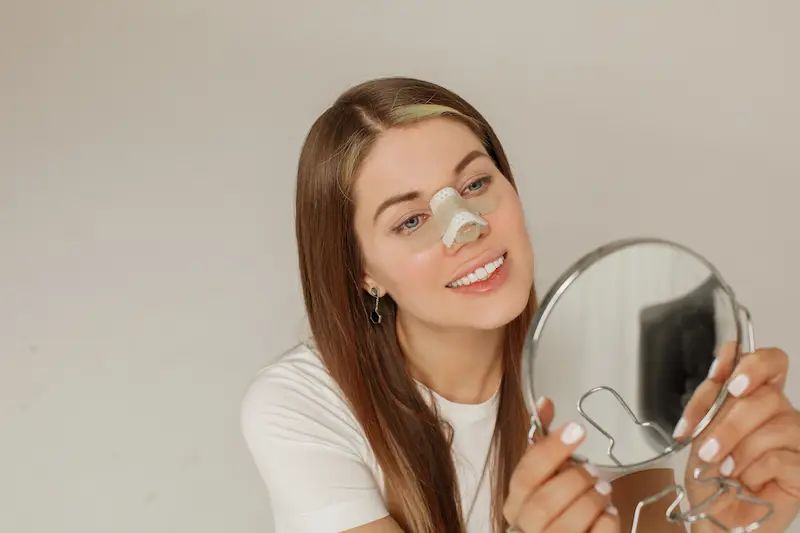
The external splint keeps your nose stable and aligned during early healing. Avoid getting it wet, scratching around it, or removing it yourself. Clean the incision sites carefully with saline spray and cotton swabs as instructed by your surgeon. This step ensures a smooth nose job healing process and prevents infection.
Nutrition and Diet: What to Eat in Your Hotel
Eating soft, low-sodium meals supports faster recovery. Choose foods like soups, yogurt, fruits, and vegetables that are easy to chew. Drink plenty of water and avoid alcohol or smoking, which slow down healing. In many Turkish recovery hotels, customized post-surgery meals are available to support recovery-friendly nutrition.
Your First Post-Op Check-up in Turkey
Around day seven, your surgeon will evaluate your healing progress, remove any stitches if necessary, and decide when to remove the nasal splint. This visit marks a major step in your Nose Job Recovery Week by Week plan. Your doctor may also provide guidance for safe travel, nasal cleaning routines, and how to minimize swelling before flying home.
Week 2: The Big Reveal (Splint Removal) and Flying Home
By the second week, the most critical phase of Nose Job Recovery begins to settle. Swelling and bruising start to fade, and for most patients recovering in Turkey, this is the exciting “reveal” period. You will see the first glimpse of your new nasal shape once the splint is removed, though the final results will still take months to refine. Understanding this stage of the rhinoplasty recovery timeline helps you manage expectations and travel safely.
What to Expect at Your Splint Removal Appointment
The splint removal usually happens around day seven or eight after your nose job. Your Turkish surgeon will gently remove the external splint and clean the area to assess healing. You may feel a slight pulling sensation, but it is generally painless. Some residual swelling will still be present, making the nose appear slightly larger or uneven. This is normal and temporary, as internal tissues are still adapting. After this appointment, you’ll be able to wash your face more comfortably and see an early version of your refined nasal shape.
Your First Look: Understanding Initial Swelling vs. Final Results
When the splint comes off, patients often feel both excitement and surprise. The bridge may look wider, or the tip may seem more raised than expected. This appearance is due to fluid retention and internal swelling. Over the following weeks, your nose job healing process continues, and the nose gradually settles into its natural contour. It’s important to remember that full rhinoplasty recovery takes several months, and subtle changes will occur as the swelling decreases.
Is It Safe? Guidelines for Flying Home After Rhinoplasty
Most patients can safely fly home between day 8 and day 10. Before traveling, your surgeon will confirm that your nasal airways are open and no bleeding risk remains. When flying after rhinoplasty in Turkey, stay hydrated, avoid heavy lifting, and use a saline spray to prevent dryness caused by cabin pressure. Wearing your mask loosely and avoiding glasses will protect your delicate nasal structure. If possible, book a direct flight to minimize pressure changes.
Managing Nasal Congestion and Breathing Improvements
Temporary nasal congestion is common due to swelling of internal tissues. This can make breathing feel slightly restricted. Using a prescribed saline spray helps keep the nasal passages moist and clear. As swelling subsides over the coming weeks, most patients report noticeable improvement in airflow, especially if their surgery included a septoplasty. Breathing becomes smoother, and your sense of smell gradually returns to normal.
The First Month (Weeks 3–4): Resuming Your Normal Life
Once you’ve returned home, your Nose Job Recovery enters the stabilization phase. The swelling continues to decrease, and you can begin integrating light daily routines. However, protecting your nose remains essential during this stage of the rhinoplasty recovery timeline, as internal tissues are still healing.
When Can I Return to Work or School?
By the third week, most patients feel ready to resume non-strenuous work or school activities. If your job doesn’t involve physical effort, you can typically return after 10–14 days. For those in public-facing roles, light concealer or tinted moisturizer can safely cover any residual bruising. Always follow your surgeon’s approval before returning to your routine, especially if you had revision or complex rhinoplasty procedures.
Reintroducing Light Exercise (Walking vs. Gym)
Walking is encouraged after the first week to promote circulation and reduce swelling. However, gym workouts, running, or swimming should wait at least four to six weeks. Any activity that increases blood pressure or risk of nose contact can prolong the nose job healing process. When restarting exercise, listen to your body—if swelling increases or your nose feels sensitive, pause immediately and consult your surgeon.
Key Restrictions: Glasses, Blowing Your Nose, and Sun Exposure
Avoid wearing glasses or sunglasses directly on the nasal bridge for at least four to six weeks. If necessary, use lightweight frames with tape or forehead supports. Blowing your nose should also be avoided during the first month to prevent bleeding or pressure changes. Sun exposure is another major concern; UV rays can darken scars and increase swelling. Use a wide-brimmed hat or high-SPF sunscreen whenever you’re outdoors.
How to Properly Clean Your Nose
Proper nasal hygiene ensures smooth rhinoplasty recovery. Use a sterile saline spray to remove dried blood and mucus. Avoid inserting cotton buds deeply into your nostrils—only clean the outer area gently. Your surgeon may recommend a mild antibacterial ointment to keep incisions moist and prevent crusting. Consistency with this care routine helps your nose heal evenly and reduces the risk of infection.
The Long-Term Healing Timeline (Month 2 to One Year)
As the initial swelling fades, your Nose Job Recovery transitions into the long-term refinement phase. During this period, subtle internal adjustments take place as your skin, cartilage, and bone settle into their new structure. Patience becomes key, as rhinoplasty recovery is a gradual process that continues for several months before you see the final shape of your nose.

The main goals of this stage are to maintain consistent aftercare, prevent trauma to the nose, and follow up with your surgeon for periodic assessments. Understanding each milestone in the rhinoplasty recovery timeline will help you stay realistic and confident throughout your healing journey.
Month 2–6: How Your Nose Shape Continues to Refine
Between the second and sixth month, internal swelling slowly subsides. You’ll start noticing finer definition at the bridge and tip, especially if your rhinoplasty involved reshaping or refining these areas. Some mornings, your nose might appear slightly puffy—this is due to fluid retention and will improve throughout the day.
By the fourth month, most patients see 70–80% of their final result. You can resume most activities, including moderate workouts and limited sun exposure (with sunscreen). However, it’s important to avoid direct trauma, as even light pressure can alter cartilage alignment during this delicate period.
6–12 Months: When Will I See the Final, Permanent Result?
The complete nose job healing process typically takes a full year, sometimes longer for thicker skin types. By the sixth month, swelling is minimal, and your nasal contours look more refined. At the one-year mark, the final shape is usually stable, with improved symmetry and definition.
At this point, many patients schedule their final follow-up with their Turkish surgeon—either in person or via online consultation—to confirm the long-term outcome. This check ensures that all tissues have healed correctly and that no secondary adjustments are needed.
Understanding Numbness and Sensation at the Nasal Tip
Temporary numbness is a common part of rhinoplasty recovery. The nasal tip, in particular, may feel stiff or less sensitive for several months due to nerve healing. This sensation gradually returns as nerve endings regenerate. Avoid tapping or massaging the tip unless specifically advised by your surgeon, as this can slow down recovery.
The Role of Scar Tissue and Nasal Taping (If Advised
Some surgeons recommend gentle nasal taping for a few weeks after the splint removal to control swelling and guide tissue adaptation. Scar tissue formation beneath the skin is natural, but excessive buildup can affect the final contour. If you notice asymmetry or firmness in certain areas, your doctor might suggest minor massage techniques or steroid injections. Maintaining regular contact with your medical team ensures that your rhinoplasty recovery remains on track.
Essential Aftercare: Do’s and Don’ts for a Faster Recovery
Your long-term success depends heavily on proper aftercare. Following post-operative instructions can dramatically shorten the rhinoplasty recovery timeline and minimize the risk of complications. Below are expert-recommended habits to support smooth healing after your nose job.
How to Sleep Safely to Protect Your Nose
Sleeping after rhinoplasty requires special care. Always lie on your back with your head elevated to reduce swelling and avoid unintentional pressure. Many patients use a neck pillow or wedge cushion to maintain this position. Side or stomach sleeping should be avoided for at least six weeks, as it can distort nasal alignment and affect results.
Pro-Tips to Minimize Swelling
Reducing swelling is one of the most important aspects of the nose job recovery process. Keep your head elevated during the day, avoid hot showers, and limit salt intake. Using cold compresses on the cheeks for short intervals helps minimize puffiness. Gentle lymphatic drainage massages may also help, but only after your surgeon confirms it’s safe.
Signs of Complications and When to Contact Your Surgeon
While rhinoplasty is generally safe, it’s important to recognize warning signs early. Persistent bleeding, severe pain, fever, or foul-smelling discharge could indicate infection. Difficulty breathing or sudden swelling should be reported immediately. If you notice unusual changes in shape, your doctor may request follow-up imaging or an in-person evaluation. Prompt communication ensures that small concerns don’t escalate into complications.
Smoking, Vaping, and Alcohol: What to Avoid and For How Long
Smoking and vaping restrict oxygen flow, delay healing, and increase the risk of infection. Avoid all nicotine products for at least one month before and after surgery. Alcohol should also be avoided during the first two weeks, as it dilates blood vessels and can worsen swelling or bruising. Following these restrictions strictly will significantly improve your rhinoplasty recovery outcome.
Nose Job Recovery in Turkey Frequently Asked Questions:
How long does nose job recovery take in Turkey?
Most patients see 70–80% of their final nose shape by about the 4th month, but full nose job recovery and the permanent result usually take 6–12 months, especially for thicker skin types.
What happens in the first 72 hours after rhinoplasty?
During the first 3 days you may feel pressure, swelling, mild pain and see nasal packing or drip pads for light bleeding. Pain is usually controlled with medication, and you must rest with your head elevated to reduce swelling.
When can I safely fly home after a nose job in Turkey?
Most patients can fly home between day 8 and day 10, once the surgeon has removed the splint, checked healing and confirmed there is no bleeding risk and that your airways are open.
When can I return to work or school after rhinoplasty?
Many patients are ready to go back to non-strenuous work or school 10–14 days after surgery, once bruising has faded and swelling is more manageable, but you should always follow your surgeon’s individual approval.
When can I start exercising again after my nose job?
Gentle walking is encouraged after the first week, but gym workouts, running or swimming should wait at least 4–6 weeks because intense activity and contact can increase swelling and risk trauma to the nose.
How can I reduce swelling and speed up my rhinoplasty recovery?
Sleep on your back with your head elevated, use cold compresses on the cheeks, avoid hot showers, salty foods, smoking, vaping and alcohol, and strictly follow all post-operative instructions from your Turkish surgeon.